
Blog
How to Choose the Right Display for Your Industrial Application

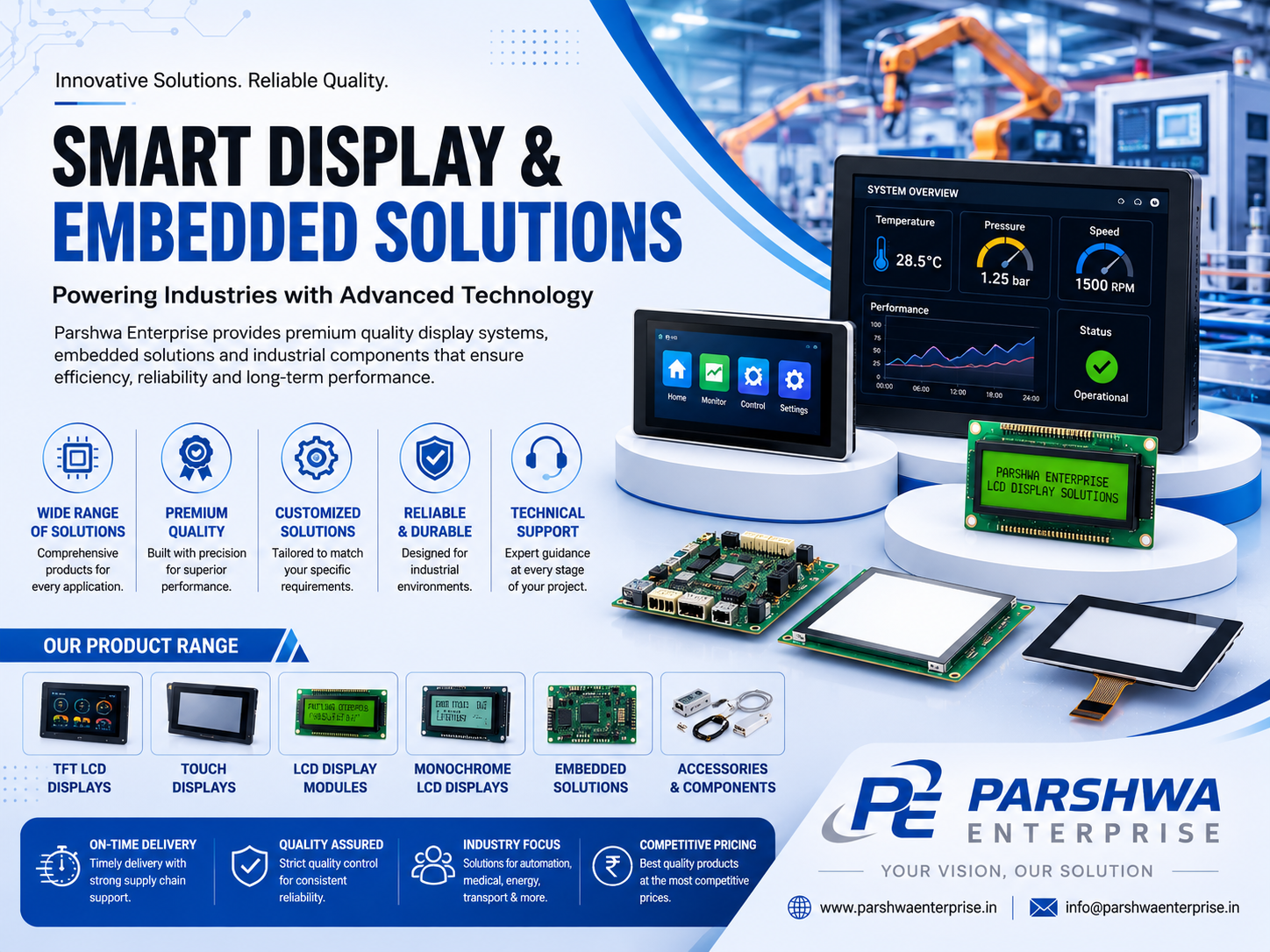
When designing industrial equipment, every component plays a crucial role in ensuring reliable performance. Among these, the display serves as the primary interface between the machine and the operator. Whether it’s a manufacturing control panel, a medical device, an agricultural machine, or an automation system, selecting the right industrial display is essential for achieving efficiency, safety, and long-term reliability.
Unlike consumer-grade screens, industrial displays are engineered to perform in demanding environments where dust, vibration, moisture, and extreme temperatures are common. Choosing the wrong display can result in poor visibility, frequent maintenance, and unnecessary downtime. That’s why understanding your application’s specific requirements is the first step toward making an informed decision.
In this guide, we’ll explore the key factors to consider when selecting the right display for industrial applications and how the right choice can improve both performance and productivity.
Why Choosing the Right Industrial Display Matters
An industrial display does much more than present information on a screen. It allows operators to monitor machine performance, respond to alerts, control processes, and make critical decisions in real time. If the display is difficult to read or fails under harsh conditions, the efficiency of the entire system can be affected.
A high-quality industrial LCD display improves usability, minimizes operational errors, and reduces maintenance costs over time. It also ensures that equipment continues to perform reliably, even in environments where standard consumer displays would quickly fail.
Investing in the right display is not just about meeting technical specifications—it’s about improving the overall reliability and lifespan of your equipment.
Start by Understanding Your Application
Before comparing different display options, it’s important to evaluate where and how the display will be used. Every industrial application has unique requirements, and these factors will determine which display is the best fit.
Ask yourself a few important questions:
- Will the display be used indoors or outdoors?
- Will it operate continuously throughout the day?
- Will users interact with the display while wearing gloves?
- Is the equipment exposed to dust, moisture, or chemicals?
- How much installation space is available?
For example, a display used inside a climate-controlled medical laboratory will have different requirements than one installed on heavy construction machinery. Understanding your working environment helps narrow down the most suitable display technology from the beginning.
Choose the Right Display Technology
Selecting the appropriate display technology is one of the most important decisions you’ll make. Each technology offers different advantages depending on the application.
TFT LCD Displays
The TFT LCD display has become the industry standard for many industrial applications. It delivers sharp image quality, vibrant colors, fast response times, and excellent reliability. These displays are commonly used in automation equipment, medical instruments, industrial control panels, and human-machine interfaces (HMIs).
Another advantage of TFT displays is their wide range of available sizes and resolutions, making them suitable for both compact handheld devices and large industrial control systems.
Monochrome LCD Displays
For applications where color graphics are not necessary, LCD display modules with monochrome technology remain a practical and cost-effective solution. They consume less power and are widely used in measuring instruments, utility meters, and portable industrial devices.
OLED Displays
Although OLED technology offers outstanding contrast and image quality, it is generally selected for specialized applications rather than continuous industrial operation. Businesses should carefully evaluate long-term durability before choosing OLED for demanding environments.
Select the Appropriate Screen Size and Resolution
Screen size should always match the intended use of the equipment. A display that is too small can make information difficult to read, while an unnecessarily large display increases costs and requires more installation space.
For compact equipment, smaller displays may be sufficient for showing basic information. Larger machines, however, often benefit from bigger screens that display graphs, operating data, and multiple controls simultaneously.
Resolution is equally important. Higher resolution provides clearer text, sharper graphics, and a better user experience. As industrial software becomes more advanced, investing in a higher-resolution display helps operators work more efficiently and reduces the likelihood of mistakes.
Choosing the right balance between size and resolution ensures optimal performance without unnecessary expenses.
Don’t Overlook Brightness and Visibility
One of the most common reasons for poor user experience is insufficient screen brightness. Industrial equipment is often installed in brightly lit factories or outdoor environments where ordinary displays become difficult to read.
If your equipment operates outdoors or in direct sunlight, consider using a high brightness display. Displays with higher brightness levels provide better readability under challenging lighting conditions and help operators access information quickly without straining their eyes.
In addition to brightness, anti-glare coatings and optical bonding technologies further improve visibility by reducing reflections and increasing screen clarity.
For indoor applications, moderate brightness levels are usually sufficient, but evaluating lighting conditions before making a decision is always recommended.
Consider Viewing Angles
Industrial equipment is not always viewed from directly in front of the screen. Operators often monitor displays from different positions while performing various tasks.
Choosing an industrial display with wide viewing angles ensures that colors remain accurate and text remains readable from multiple directions. This is particularly important for control rooms, production lines, and collaborative workstations where several operators may need to view the display simultaneously.
Displays featuring IPS technology generally offer excellent viewing angles and consistent image quality.
Choose the Right Touchscreen Technology
Touchscreen functionality has become increasingly common across industrial equipment because it simplifies operation and creates a more intuitive user experience.
There are two primary touchscreen technologies used in industrial environments.
Resistive Touchscreens
Resistive touchscreens respond to pressure, making them ideal for environments where operators wear gloves or use styluses. They are durable, cost-effective, and commonly found in manufacturing facilities and industrial machinery.
Capacitive Touchscreens
Industrial touchscreen displays with capacitive technology offer excellent responsiveness, multi-touch support, and improved visual clarity. They provide a modern user experience and are widely used in medical equipment, smart kiosks, and advanced industrial interfaces.
The right touchscreen depends entirely on how operators interact with the equipment on a daily basis.
Evaluate Environmental Conditions
Industrial environments are rarely gentle on electronic components. Before selecting a display, carefully evaluate the environmental conditions in which it will operate.
Temperature is one of the most critical factors. Some industrial equipment operates in freezing warehouses, while others function in extremely hot manufacturing plants. Choosing displays designed for extended operating temperatures helps ensure reliable performance throughout the year.
Dust and moisture are equally important considerations. Displays with appropriate protection ratings help prevent failures caused by environmental contaminants.
If equipment experiences continuous vibration or mechanical shock, selecting rugged industrial display panels specifically designed for harsh environments will significantly improve reliability and reduce maintenance requirements.
Think About Long-Term Reliability
Industrial equipment is expected to remain operational for many years, making long-term reliability a key purchasing consideration.
Unlike consumer electronics, industrial systems often require components with extended product availability. Replacing a discontinued display can be both expensive and time-consuming.
Working with an experienced industrial display manufacturer ensures access to long-term product support, consistent quality, and dependable supply chains. Reliable manufacturers also offer engineering assistance and customized solutions when standard displays do not meet specific project requirements.
Although the initial investment may be slightly higher, choosing reliable components often results in lower total ownership costs over the lifetime of the equipment.
When Should You Consider Custom Display Solutions?
Not every industrial project can be completed using standard off-the-shelf displays. Some applications require unique screen dimensions, specialized interfaces, enhanced brightness, protective cover glass, or integrated touch functionality.
In these situations, custom display solutions provide greater flexibility while ensuring the display perfectly matches the equipment’s design requirements.
Custom displays are especially valuable for OEMs developing proprietary products that require unique user interfaces or compact mechanical designs. They also allow manufacturers to improve branding, simplify integration, and enhance overall product performance.
Partnering with a supplier capable of designing customized display solutions can significantly reduce development challenges while delivering a better end product.
Final Thoughts
Selecting the right industrial display is about much more than choosing a screen that looks good. It requires a careful evaluation of your application’s environment, operating conditions, display technology, brightness, touchscreen requirements, and long-term reliability.
Whether you’re designing automation equipment, medical devices, transportation systems, or industrial control panels, the right display can improve productivity, reduce maintenance costs, and provide operators with a seamless user experience.
As industrial technology continues to evolve, investing in high-quality industrial LCD displays, reliable TFT LCD displays, and application-specific LCD display modules will help ensure your equipment performs efficiently for years to come. By working with an experienced industrial display manufacturer, businesses can also benefit from expert guidance and custom display solutions tailored to their exact requirements.
Choosing wisely today means building more reliable, durable, and efficient industrial systems for the future.